

























Introduction
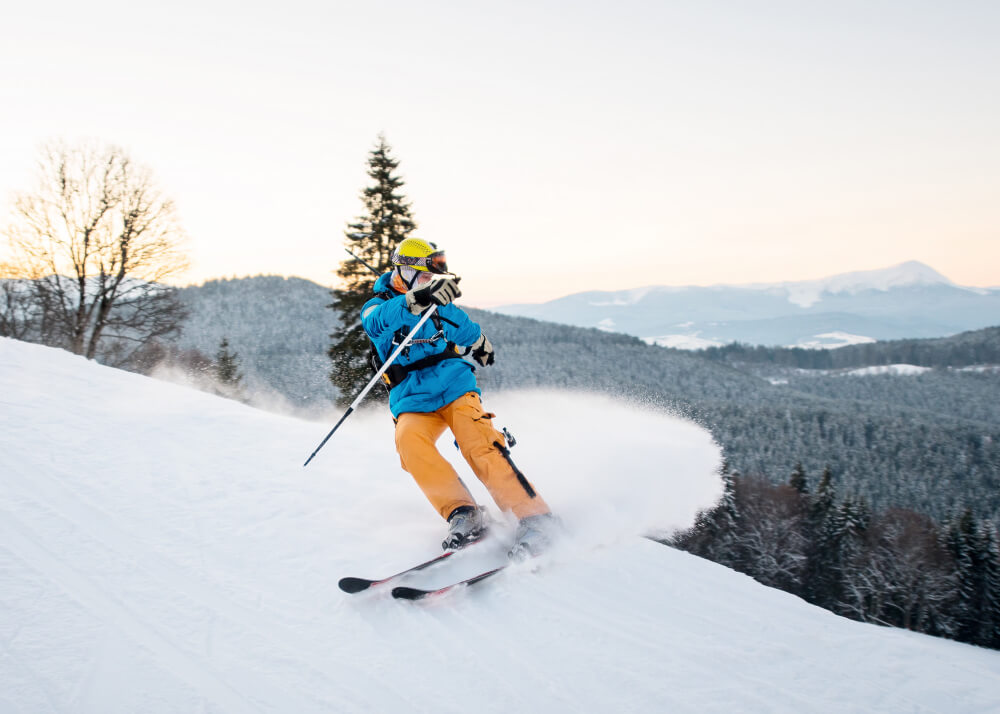
1. Understanding Your Skill Level
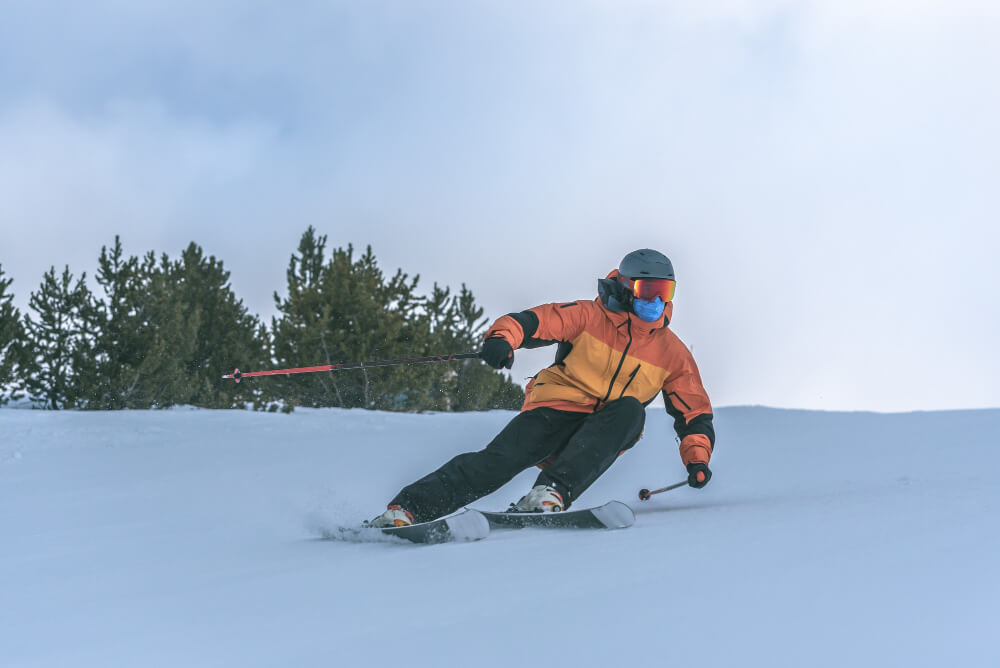
Your skill level is one of the most important factors when selecting the right skis. Skis are designed with specific flex patterns, widths, and construction materials to match the needs of skiers at different experience levels. Choosing skis that align with your ability will make skiing easier, more enjoyable, and help you progress faster.
Beginner Skis
If you’re new to skiing or still mastering basic turns, beginner-friendly skis will help you build confidence and control. These skis are designed to be forgiving and easy to maneuver.
- Soft flex for effortless turning and better stability.
- Wider waist to enhance balance and prevent tipping over.
- Less aggressive sidecut to reduce the chance of catching edges.
- Lightweight materials to make skiing less physically demanding.
- Recommended Models: Rossignol Experience 76, Salomon QST Spark, K2 Mindbender 85
Intermediate Skis
For skiers who feel comfortable on groomed trails and want to start exploring more terrain, intermediate skis offer a balance of performance and control.
- Medium flex provides a mix of stability and responsiveness.
- Versatile waist width allows skiing on both groomed runs and light off-piste conditions.
- Moderate sidecut enables better carving without making turns too aggressive.
- More durable materials for added power without being too stiff.
- Recommended Models: Atomic Bent 90, Blizzard Rustler 9, Nordica Enforcer 94
Advanced/Expert Skis
For those who ski aggressively, love high speeds, and enjoy challenging terrain, advanced skis offer precision and power. These skis are built for performance and require more skill to control.
- Stiff flex for high-speed stability and aggressive turns.
- Narrower waist for carving or wider waist for powder and freeride skiing.
- Strong materials like carbon or titanium to increase strength and responsiveness.
- Advanced edge technology for better grip on icy or steep slopes.
- Recommended Models: Volkl Mantra M6, Head Kore 105, Fischer Ranger 102
Why Skill Level Matters
Using skis that match your skill level can enhance your learning curve, make skiing less tiring, and improve your overall confidence on the slopes. Beginners will benefit from softer, more forgiving skis, while experts will appreciate the power and control of high-performance models. Picking the right ski for your ability ensures a smoother and more enjoyable experience every time you hit the mountain.
2. Choosing the Right Ski Type
The type of skiing you enjoy plays a crucial role in determining the best skis for you. Different skis are designed for different conditions, from perfectly groomed slopes to deep powder and rugged backcountry terrain. Understanding the key characteristics of each ski type will help you make the right choice.
If you primarily ski on groomed runs, you’ll want skis that offer edge grip and stability. If you prefer off-piste terrain or deep snow, you’ll need skis that provide flotation and maneuverability. Freestyle skiers require twin-tip designs for tricks and jumps, while backcountry enthusiasts need lightweight touring skis for uphill efficiency.
Here’s a breakdown of the most common ski types:
| Ski Type | Best For | Key Features |
|---|---|---|
| All-Mountain | Skiers who enjoy a mix of terrain | Medium width, balanced flex, versatile design |
| Powder | Skiing in deep snow | Wide waist (100mm+), rockered tips, soft flex |
| Carving | High-speed turns on groomed runs | Narrow waist, deep sidecut, camber profile |
| Freestyle | Jumps, tricks, and terrain parks | Twin-tip design, flexible, playful |
| Backcountry | Exploring off-piste terrain and ski touring | Lightweight, reinforced edges, uphill compatibility |
All-Mountain Skis
If you want a versatile ski that can handle a variety of conditions, all-mountain skis are the best option. They perform well on groomed runs, can handle some powder, and offer a balanced mix of stability and maneuverability.
- Best for: Skiers who enjoy a mix of terrain and conditions.
- Recommended Models: Salomon Stance 90, Nordica Enforcer 100, Atomic Maverick 86 C
Powder Skis
Designed for deep snow, powder skis are wider than other types, with a rockered profile to help keep the skis floating above soft snow.
- Best for: Off-piste skiers who love deep powder days.
- Recommended Models: Armada ARV 116, Blizzard Rustler 11, K2 Reckoner 110
Carving Skis
For those who love carving fast, precise turns on groomed slopes, carving skis have a narrow waist and deep sidecut, making them highly responsive.
- Best for: Skiers who stick to resort trails and enjoy sharp turns.
- Recommended Models: Rossignol Hero Elite, Head Supershape e-Magnum, Volkl Deacon 84
Freestyle Skis
Built for terrain parks, jumps, and tricks, freestyle skis are lightweight, flexible, and twin-tipped, allowing for smooth landings and spins.
- Best for: Skiers who enjoy park skiing, rails, and aerial tricks.
- Recommended Models: Line Chronic 101, Faction Prodigy 2.0, Armada ARV 96
Backcountry Skis
For off-piste adventures, backcountry skis are lightweight and durable, often designed for uphill travel with skins and special bindings.
- Best for: Skiers who love exploring untouched terrain away from resorts.
- Recommended Models: DPS Pagoda Tour 100, Black Crows Camox Freebird, Salomon MTN 96
Making the Right Choice
If you mostly ski on groomed trails, carving or all-mountain skis are your best bet. If you love off-piste and deep snow, powder or backcountry skis will provide the best performance. Freestyle skiers should opt for twin-tip models, while those who enjoy hiking to fresh snow should look at lightweight backcountry skis.
By selecting the right ski type, you’ll maximize performance, comfort, and enjoyment in your preferred skiing environment.
3. How Ski Length and Width Affect Performance
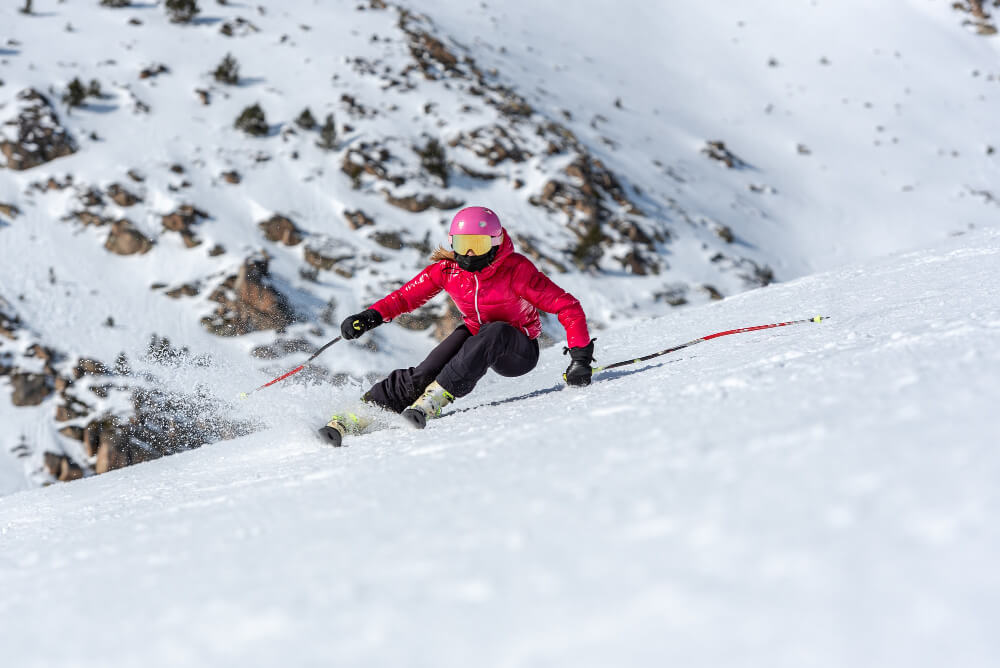
The length and width of your skis significantly impact how they handle on the slopes. The right dimensions will enhance stability, maneuverability, and overall control, making skiing more enjoyable and less physically demanding.
Choosing the wrong size can make skiing more difficult. Too short, and you may lack stability at high speeds. Too long, and you might struggle with turning and control. Similarly, ski width affects how well your skis grip the snow or float in powder.
Ski Length: Finding the Right Fit
The general rule for ski length is that skis should fall somewhere between your chin and the top of your head, but the best length depends on your skill level, skiing style, and preferred terrain.
-
Shorter Skis (Chin-Height or Below):
- Easier to turn and maneuver.
- Require less effort, making them ideal for beginners.
- Better for freestyle skiers who need quick response in terrain parks.
- Recommended Short Skis: K2 Disruption 78C, Atomic Cloud C9
-
Longer Skis (Head-Height or Above):
- Provide greater stability at high speeds.
- Offer better performance in deep snow and off-piste skiing.
- More suited for advanced skiers who prefer aggressive turns.
- Recommended Long Skis: Fischer Ranger 90, Volkl Mantra M7
Ski Width: Narrow vs. Wide Skis
The width of a ski, also called waist width, determines how it performs in different snow conditions.
-
Narrower Skis (70-85mm underfoot):
- Provide better edge grip on groomed runs and hard-packed snow.
- Allow for quicker, more precise turns.
- Ideal for carving and on-piste skiing.
- Recommended Narrow Skis: Rossignol Experience 82, Head V-Shape V8
-
Wider Skis (90-120mm underfoot):
- Float better in powder and softer snow conditions.
- Offer more stability in off-piste and backcountry terrain.
- Require more effort to turn on hard-packed snow but excel in deep snow.
- Recommended Wide Skis: Blizzard Rustler 10, Salomon QST 106
Making the Right Choice
- If you ski mostly on groomed runs, go for narrower skis with a shorter length for better control.
- If you love powder and backcountry terrain, opt for longer, wider skis to help with stability and flotation.
- Intermediate and advanced skiers often prefer a mid-range width (85-100mm) for all-mountain versatility.
Selecting the right ski length and width ensures better performance, efficiency, and overall comfort on the slopes.
4. Camber vs. Rocker: What’s Right for You?
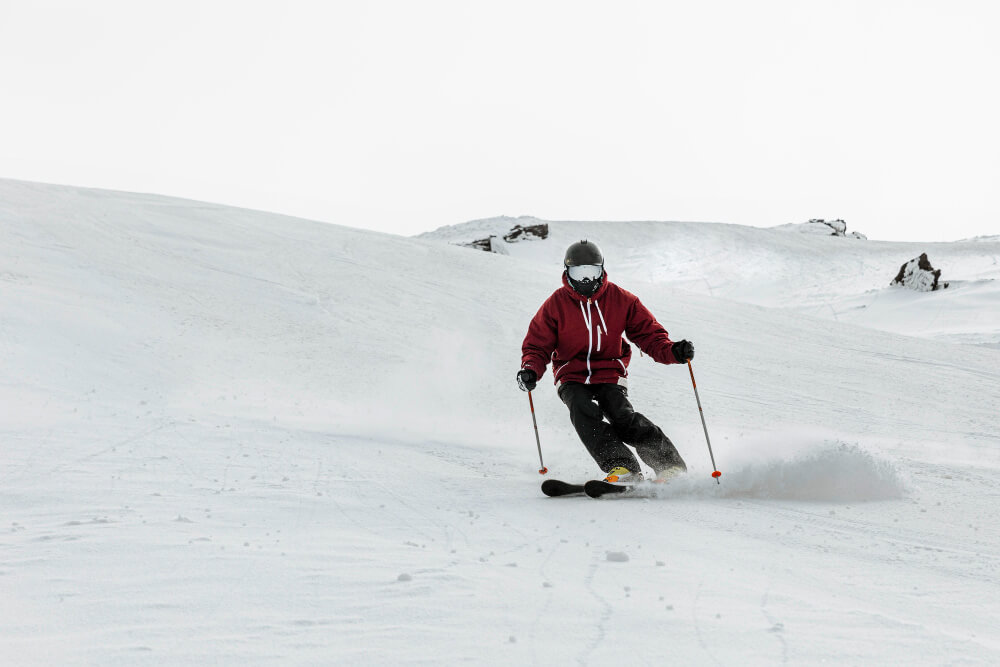
The profile of a ski, or its base shape, determines how it interacts with the snow. This affects how well it grips the surface, how easy it is to turn, and how it performs in different conditions. There are three main ski profiles: camber, rocker, and hybrid. Choosing the right one can make skiing easier, more stable, and more enjoyable.
Camber: Precision and Grip
Camber skis have a traditional arch shape, meaning the middle of the ski is slightly lifted off the ground when placed on a flat surface, with the tips and tails touching.
- Strong edge grip for precise turns and high-speed stability.
- Better energy transfer, making them ideal for aggressive skiing.
- Best suited for groomed slopes and hard-packed snow.
- Requires more effort in deep snow but provides excellent control on ice.
- Recommended Camber Skis: Head Supershape i.Rally, Volkl Deacon 76
Rocker: Easy Turns and Powder Floatation
Rocker skis, also known as reverse camber, curve upward at the tip and sometimes at the tail, lifting them off the ground. This helps the ski float in deep snow and makes turning easier.
- Ideal for powder skiing and soft snow conditions.
- More forgiving, making them easier to maneuver.
- Less edge contact with hard snow, reducing grip on icy slopes.
- Great for beginners or skiers who love playful, surfy turns.
- Recommended Rocker Skis: Armada Tracer 98, K2 Mindbender 108
Hybrid (Camber/Rocker Mix): The Best of Both Worlds
Hybrid skis combine camber underfoot for grip and stability with rocker at the tip and/or tail for float and easy turning. This makes them highly versatile, allowing skiers to enjoy a mix of conditions.
- Balances control, edge grip, and maneuverability.
- Works well for all-mountain skiers who want versatility.
- Offers solid performance on both groomed runs and off-piste terrain.
- Recommended Hybrid Skis: Nordica Enforcer 104 Free, Salomon QST 98
Which One Should You Choose?
- If you ski mostly on hard-packed snow and groomed runs, camber is the best choice for precision and stability.
- If you love powder and off-piste terrain, rocker will help you stay afloat and turn more easily.
- If you want an all-around ski that can handle different conditions, go for a hybrid profile to get the benefits of both.
Selecting the right ski profile ensures better performance and confidence on the slopes, no matter the terrain or conditions.
5. Matching Skis to Terrain and Snow Conditions
The type of terrain and snow conditions you encounter most frequently should play a key role in selecting the right skis. Different conditions require different ski characteristics, and choosing the right match will improve your performance, control, and overall enjoyment on the slopes.
Hard-Packed Snow & Icy Conditions
For firm snow and icy runs, you need skis that provide strong edge grip and stability.
- Narrower carving skis (70-85mm waist) with a camber profile work best.
- A stiff flex helps maintain control and precision at high speeds.
- Ideal for skiers who stick to groomed resort trails.
- Recommended Skis: Rossignol Hero Elite, Head Supershape e-Magnum
Soft Snow & Powder
Deep powder requires skis that float rather than sink. Powder skis are designed for off-piste skiing and fresh snowfall.
- Wide waist (100mm+ underfoot) helps distribute weight over soft snow.
- Rockered tips and tails enhance maneuverability and prevent sinking.
- Soft to medium flex makes skiing through powder feel more playful and surfy.
- Recommended Skis: Armada ARV 116, Blizzard Rustler 11, K2 Reckoner 110
Mixed Conditions (All-Mountain Skiing)
If you ski a mix of groomed runs, soft snow, and occasional powder, all-mountain skis are your best bet.
- Hybrid camber/rocker profile balances edge grip and versatility.
- Waist width between 85-100mm allows for performance in various conditions.
- Medium flex provides stability while maintaining easy turn initiation.
- Recommended Skis: Salomon Stance 90, Nordica Enforcer 100, Atomic Maverick 95 TI
Backcountry Terrain & Touring
For off-the-beaten-path adventures, lightweight touring skis are essential. They’re designed for both uphill and downhill travel.
- Lightweight construction reduces fatigue on long ascents.
- Waist width between 90-110mm for a balance of stability and efficiency.
- Compatible with touring bindings and climbing skins.
- Recommended Skis: DPS Pagoda Tour 105, Black Crows Camox Freebird, Salomon MTN 96
Making the Right Choice
If you ski mostly on groomed slopes, go for carving or all-mountain skis with a narrower waist and camber profile. If you chase powder, opt for wider skis with a rocker shape. If you love exploring the backcountry, lightweight touring skis will provide the best experience.
By choosing skis suited to your terrain, you’ll maximize your control, efficiency, and overall enjoyment on the slopes.
6. The Importance of Ski Flex and Stiffness
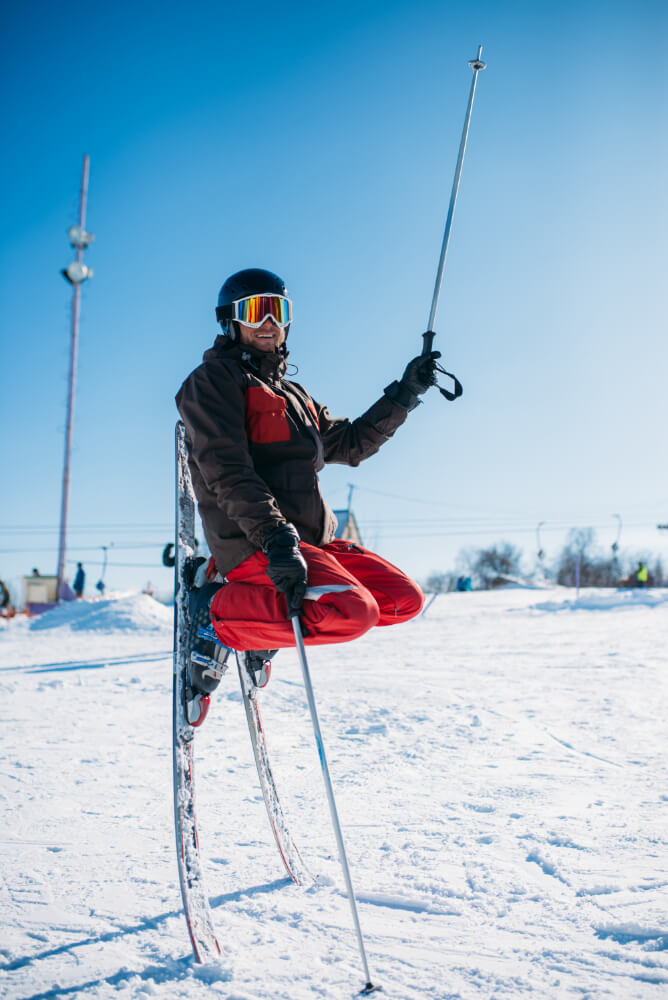
Ski flex refers to how much a ski bends under pressure, affecting how it responds to turns, bumps, and different snow conditions. The right flex can make skiing easier, more stable, and better suited to your skill level and style. A softer ski is more forgiving and easier to maneuver, while a stiffer ski provides more power and control at high speeds.
Soft Flex: Easy and Playful
- Easier to turn, making them ideal for beginners.
- Absorbs bumps and uneven terrain, providing a smoother ride.
- Great for freestyle skiers who need flexibility for jumps and tricks.
- Often found in beginner, freestyle, and powder skis.
- Recommended Soft Flex Skis: K2 Poacher, Line Chronic 101, Rossignol Experience 76
Medium Flex: Balanced and Versatile
- Offers a balance between control and maneuverability.
- Provides stability at moderate speeds while remaining forgiving.
- Best for intermediate and advanced skiers who ski a variety of terrain.
- Common in all-mountain and freeride skis.
- Recommended Medium Flex Skis: Atomic Bent 90, Nordica Enforcer 94, Blizzard Rustler 10
Stiff Flex: Power and Precision
- More stability and power, especially at high speeds.
- Requires more strength and technique to maneuver.
- Best for expert-level skiers and aggressive riders.
- Found in carving, race, and high-performance freeride skis.
- Recommended Stiff Flex Skis: Volkl Mantra M7, Head Kore 105, Fischer Ranger 102
Choosing the Right Flex for You
- If you’re a beginner or freestyle skier, a soft flex ski will make turns easier and improve comfort.
- If you want versatility, a medium flex ski offers a great mix of stability and maneuverability.
- If you’re an aggressive skier who loves speed and control, a stiff flex ski will provide the precision you need.
Matching flex to your skill level and skiing style ensures better comfort, control, and overall performance, making your time on the slopes more enjoyable and efficient.
7. Finding the Right Ski Bindings
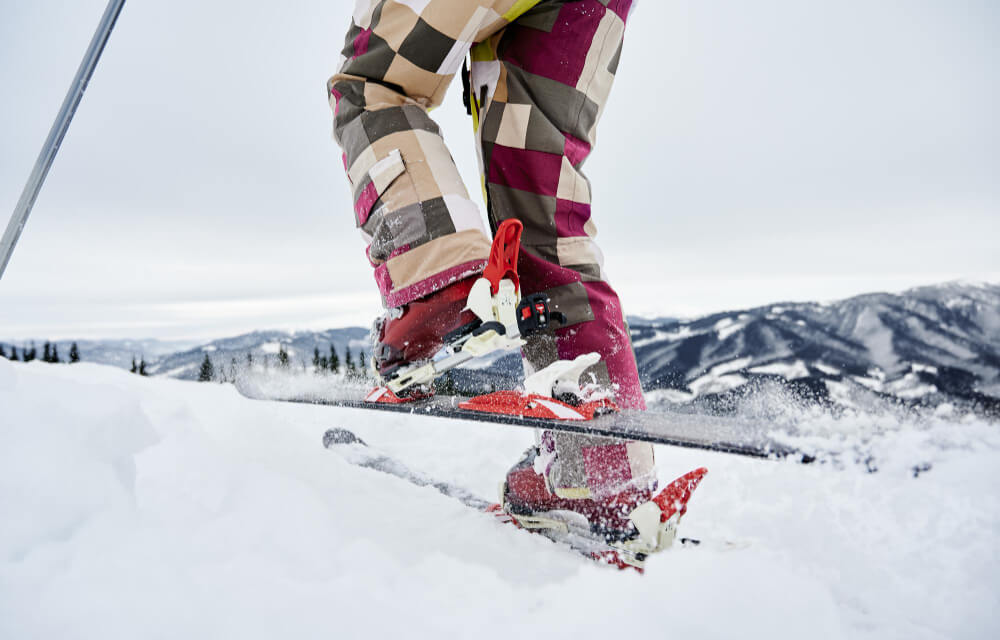
Ski bindings are a crucial component of your setup, affecting both safety and performance. They connect your boots to your skis and are designed to release in case of a fall, helping prevent injuries. Choosing the right bindings depends on your skiing style and the terrain you ski most often.
Types of Ski Bindings
-
Alpine Bindings:
- Standard bindings for resort skiing.
- Offer strong edge control and reliable release mechanisms.
- Suitable for beginners to advanced skiers.
- Recommended Models: Marker Griffon 13, Look Pivot 14, Salomon Warden 11
-
Touring Bindings:
- Designed for backcountry skiing and uphill travel.
- Lightweight with a hike mode to allow free-heel movement.
- Must be paired with touring boots for compatibility.
- Recommended Models: Dynafit Radical ST, Marker Kingpin 13, Salomon Shift MNC 13
-
Freestyle Bindings:
- Built for terrain park and freestyle skiing.
- More shock-absorbent to handle landings and jumps.
- Designed to work well with twin-tip skis.
- Recommended Models: Tyrolia Attack 14, Look Pivot 12
Understanding DIN Settings
The DIN setting (release force) determines how easily your bindings release in a fall. It should be adjusted based on your weight, skill level, and skiing style:
- Lower DIN (4-8): For beginners and lighter skiers, ensuring easy release.
- Medium DIN (8-12): Suitable for intermediate to advanced skiers.
- Higher DIN (12+): For experts, aggressive skiers, and racers, requiring more force to release.
Here you can find professinal DIN calculator.
Choosing the Right Bindings
- If you ski mostly at resorts, alpine bindings are the best choice.
- If you enjoy backcountry touring, go for lightweight touring bindings.
- If you ski in the terrain park, freestyle bindings will give you the durability and flexibility you need.
Properly fitted and adjusted bindings enhance safety and control, making skiing more comfortable and enjoyable. Always have bindings mounted and adjusted by a professional to ensure the correct settings for your ability and style.
8. Brand and Budget Considerations
When choosing the right skis, brand reputation and budget are important factors to consider. Different ski brands specialize in specific types of skis, catering to different skiing styles and ability levels. While some brands are known for high-performance race skis, others focus on playful freestyle designs or versatile all-mountain options.
Below is an overview of some of the top ski brands and their specialties:
| Brand | Best For | Notable Models |
|---|---|---|
| Rossignol | Versatile all-mountain and carving skis | Rossignol Experience 88, Hero Elite |
| Salomon | Freestyle and freeride innovation | Salomon QST 106, Stance 90 |
| Atomic | High-performance race and carving skis | Atomic Redster X9, Bent 100 |
| Blizzard | Aggressive and stiff high-speed skis | Blizzard Brahma 88, Rustler 10 |
| K2 | Fun, playful designs for all levels | K2 Reckoner 102, Mindbender 99 |
| Nordica | Strong all-mountain and freeride performance | Nordica Enforcer 100, Santa Ana 98 |
| Volkl | Precision and expert-level performance | Volkl Mantra M6, Deacon 84 |
| Faction | Modern, lightweight, and freestyle-friendly | Faction Prodigy 2.0, Dictator 3.0 |
| DPS | Premium backcountry and powder skis | DPS Pagoda Tour 100, Lotus 124 |
| Black Crows | Stylish, high-performance freeride skis | Black Crows Camox Freebird, Atris |
Budget Guidelines
Ski prices vary based on materials, technology, and performance level. While beginners can find quality skis at a lower price, expert-level skis with carbon fiber, titanium reinforcements, and advanced designs tend to cost more.
| Skill Level | Price Range | What to Expect |
|---|---|---|
| Beginner Skis | $300 – $500 | Softer flex, forgiving design, basic materials. |
| Intermediate Skis | $500 – $800 | Versatile performance, improved stability, hybrid designs. |
| Advanced Skis | $800+ | High-performance materials, precision construction, expert-level stability. |
Making the Right Investment
- If you’re new to skiing, there’s no need to buy the most expensive skis—look for affordable beginner-friendly models.
- Intermediate skiers should invest in a ski that provides both stability and room to grow in ability.
- Advanced and expert skiers benefit from high-quality materials that offer maximum performance and durability.
Investing in quality skis ensures durability, long-term satisfaction, and better skiing performance. If unsure, renting or demoing skis before purchasing can help find the perfect fit for your needs.
Conclusion
Finding the best skis for you comes down to skill level, terrain, snow conditions, and skiing style. Beginners should opt for soft, forgiving skis, while experts will benefit from stiffer, performance-oriented models. Factors like ski length, width, camber profile, and bindings all play a crucial role in comfort and efficiency on the slopes.
Before making a purchase, consider renting or demoing different skis to find the best fit. Consulting a ski shop expert can also help narrow down your options.
Now that you have all the information, you’re ready to answer the question: What skis are best for me? Grab the right pair, hit the slopes, and enjoy every turn!