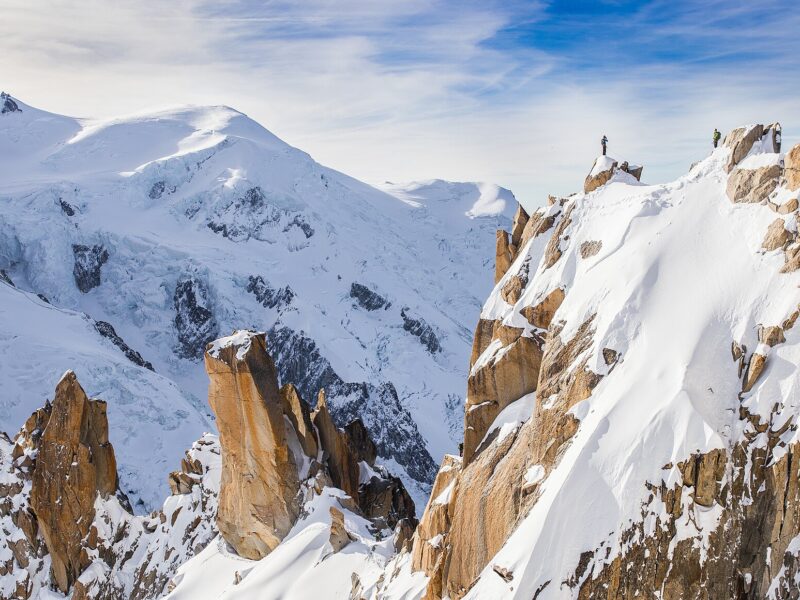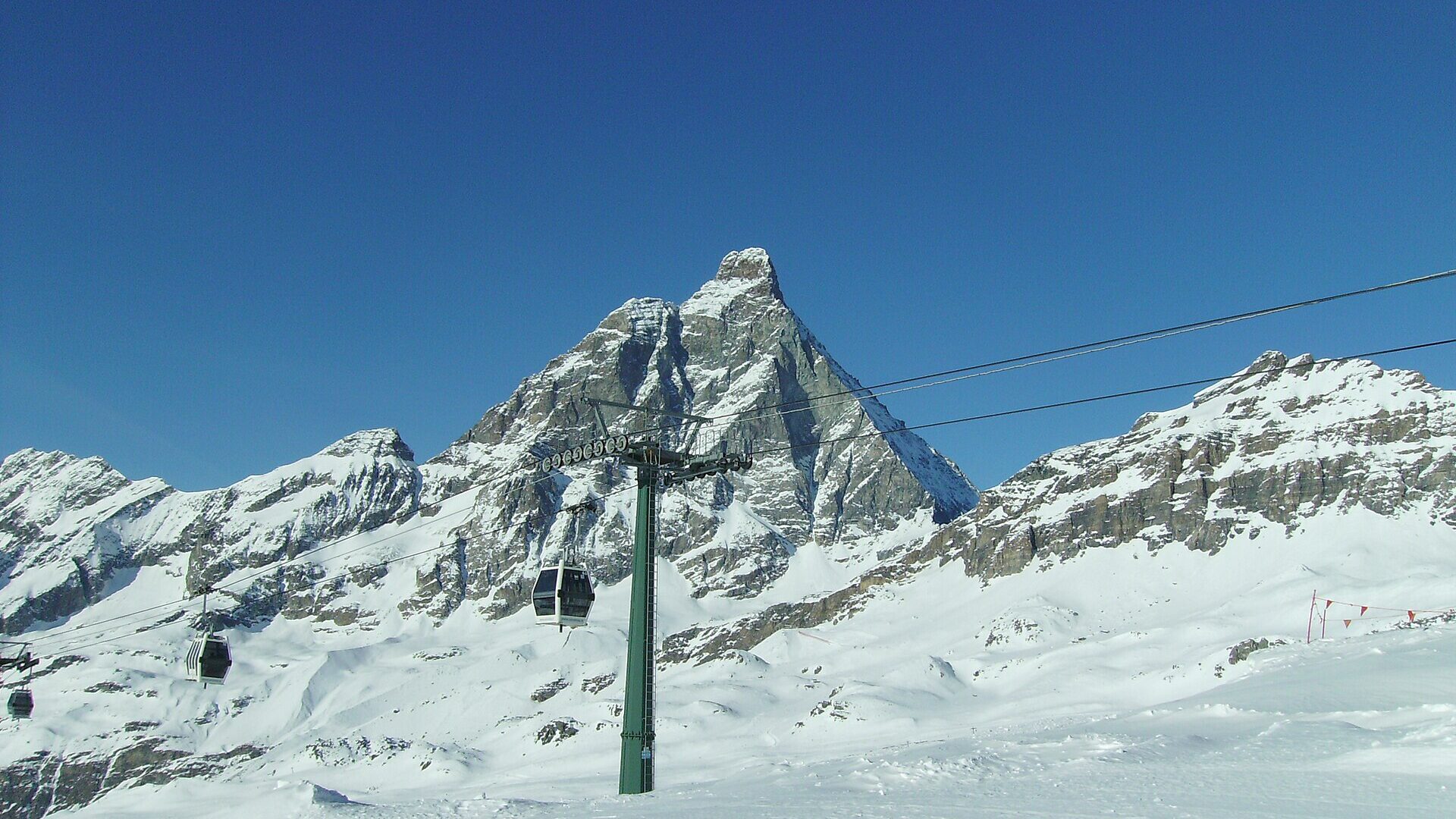

Cervinia and Zermatt share one ski area. The Zermatt-Cervinia network has 322 km of slopes on 52 lifts, a top station at 3,883 m, the highest lift-served skiing in Europe, and a season from November to May, and you can ski from either village to the other across the Italian-Swiss border. The choice is about the village, the base altitude and the price. Cervinia sits at 2,050 m, sells its own day pass for €63 and gets the afternoon sun. Zermatt sits at 1,620 m, charges 96 CHF, about €101, for its side, and is car-free, historic and expensive. Choose Cervinia for value, wide sunny pistes and snow to the door; choose Zermatt for the village, the vertical and the long runs home.
Key takeaways
- Same area: 322 km, 52 lifts, 75 km easy / 220 km intermediate / 27 km expert (23 / 68 / 9%), two snow parks, top station 3,883 m.
- Cervinia base 2,050 m, vertical 1,833 m; Zermatt base 1,620 m, vertical 2,263 m, the third biggest in our database.
- Day pass: Cervinia €63 (Italian side, 2026/27); Zermatt 96 CHF, about €101 (Swiss side, dynamic pricing). The cross-border pass costs more than either.
- Both flagged snow-sure with a November to May season. Both have two snow parks and a top-facilities flag; only Zermatt carries a traditional-charm flag.
- Airports: Turin 82 km from Cervinia; Milan Malpensa 87 km from Zermatt, with Geneva about three and a half hours away by train.
Cervinia vs Zermatt: the numbers side by side
| Cervinia | Zermatt | |
|---|---|---|
| Country | Italy (Aosta Valley) | Switzerland (Valais) |
| Ski area | Zermatt-Cervinia, 322 km | Zermatt-Cervinia, 322 km |
| Easy / intermediate / expert | 75 / 220 / 27 km | 75 / 220 / 27 km |
| Lifts | 52 | 52 |
| Base elevation | 2,050 m | 1,620 m |
| Top elevation | 3,883 m | 3,883 m |
| Vertical drop | 1,833 m | 2,263 m |
| Season (our data) | November to May | November to May |
| Snow parks | 2 | 2 |
| Adult day pass | €63 (Breuil-Cervinia/Valtournenche, Italian side) | 96 CHF, about €101 (Zermatt area, dynamic pricing) |
| Nearest airport | Turin, about 82 km | Milan Malpensa, about 87 km |
| Intski flags | Snow-sure, stunning views, top facilities | Stunning views, snow-sure, top facilities, traditional charm |
| Tags | Matterhorn, high altitude, cross-border, long season | Matterhorn, car-free, glacier, year-round skiing, luxury |
| Rank by size | 3rd of 30 in Italy | 5th of 30 in Switzerland |
Source: Intski resort database and lift pass index, checked 14 September 2026. Slope figures and difficulty shares describe the whole linked area (shares from skiresort.info). Swiss price converted at the ECB rate of 11 September 2026. Airport distances are straight-line.
One mountain, two bases
The Matterhorn ski paradise, as Zermatt markets it, links three sectors: Zermatt’s Sunnegga-Rothorn and Gornergrat, the Klein Matterhorn glacier at 3,883 m, and Cervinia-Valtournenche on the Italian side. The link runs over the Theodul pass at 3,292 m and the Klein Matterhorn cable car. In our data the whole area is 322 km, 68% of it intermediate, one of the highest intermediate shares of any big area in our database. Wherever you sleep, the same red runs are yours with the cross-border pass. Our guide to reading slope statistics explains why the linked-area figure describes the whole and not the village.
What differs is the character of each side. Cervinia’s slopes are high, wide and south-facing: a bowl of long, groomed reds and blues between 2,050 m and 3,480 m, with the sun on them in the afternoon and a 13 km run from the glacier to Valtournenche. Zermatt’s are steeper and more varied, spread across three separate mountains with the village in the middle, with tree-lined runs lower down and the most famous view in skiing from every one of them.
Altitude and snow
Cervinia’s base at 2,050 m is the highest of any major Italian resort in our data and above the 2,200 m line for most of its terrain, which is why the village has snow to the door from November to May and a snow-sure flag. Zermatt’s base at 1,620 m is 430 m lower; the village runs are the first to suffer in a warm spell, though a top station at 3,883 m and a glacier that skis all year mean the mountain itself never closes. Zermatt’s reward for the lower base is vertical: 2,263 m, the third biggest in our database behind Chamonix and Les Deux Alpes, against Cervinia’s 1,833 m. Our vertical drop guide explains what that buys: the long descents to the village that Zermatt is known for, and a weather range that keeps something skiable in almost any conditions.
Both sides carry a November to May season. Zermatt opens its glacier lifts year-round; Cervinia’s own opening is usually in late October or November on the Plateau Rosa. Both are among the best choices in the Alps for a late-April trip; see our guide to the best time to ski in the Alps.
Price
This is where the two separate. Cervinia’s adult day pass for the Italian side is €63 for 2026/27, below Italy’s median of €72 in our index. Zermatt’s day pass for the Swiss side is 96 CHF, about €101, among the three most expensive in Europe in our index with St. Moritz and Andermatt, and priced dynamically, so the walk-up rate on a peak Saturday is the most you will pay and an online ticket weeks ahead is cheaper. The international pass covering both sides costs more than either; both resorts’ official sites publish the current rate.
The gap runs through the whole holiday. Switzerland’s median day pass is €87 against Italy’s €72, and Zermatt’s hotels, restaurants and mountain lunches are priced for a luxury market. Cervinia is not cheap by Italian standards, but a week there with a cross-border pass for the days you want Zermatt’s side is the classic way to ski the whole area for less. Run both through the ski trip cost calculator before deciding; our guide to how much a ski trip costs shows where the money goes.
The villages
Zermatt is a car-free town of about 5,800 people at the head of the Mattertal, reached by train from Täsch, with a history that starts with the 1865 first ascent of the Matterhorn and an old quarter of wooden barns among the hotels. Our data flags it for traditional charm as well as views and facilities, and its tags read car-free, glacier, luxury. The après scene is real and the restaurants are among the best in the Alps.
Cervinia is a hamlet of the comune of Valtournenche, built as a resort from the 1930s onward at 2,050 m, and it looks like it: functional, sunny, with the Matterhorn’s south face, the Cervino, filling the end of the street. It is quieter in the evening and cheaper at the table. Families and groups who come to ski rather than to dine will not miss what Zermatt has; those who want the village as much as the mountain will.
Getting there
Cervinia’s nearest airport in our data is Turin, 82 km away as the crow flies and about two hours by road; Milan Malpensa is a similar drive. Zermatt’s nearest is Milan Malpensa at 87 km, roughly three hours by road to Täsch and then the shuttle train, or Geneva in about three and a half hours by direct train via Visp. Zermatt is the easier resort to reach without a car; Cervinia is the easier one to drive to. Official sites: Cervinia and Zermatt.
The verdict by skier type
- Value: Cervinia. €63 against about €101 for the day pass, and the same gap in the village.
- Beginners and cautious intermediates: Cervinia. Wide, sunny, high blue and red runs from the front door, and the 75 km of easy terrain is mostly on the Italian side.
- Confident intermediates: either. 220 km of red runs on one pass; sleep where the budget says.
- Experts and off-piste: Zermatt. The steeper sectors, the 2,263 m vertical, the Stockhorn and the guided routes are on the Swiss side.
- Snow to the door in November or April: Cervinia, 430 m higher at the base.
- The village, the food and the view: Zermatt.
- Families: Cervinia for price and ease; Zermatt if the budget is not the question.
- Without a car: Zermatt, by train from Geneva, Zurich or Milan.
Put them side by side in the compare tool, or read Zermatt vs Verbier for Switzerland’s other big decision.
Undecided? Set a snow alert on both resort pages and book the side that gets the first big dump.
Quick answers
Are Cervinia and Zermatt the same ski area?
Yes. Both are entry points to the Zermatt-Cervinia area, 322 km of slopes on 52 lifts with a top station at 3,883 m, linked over the Theodul pass. The cross-border pass lets you ski both sides; each village also sells a cheaper pass for its own side.
Is Cervinia cheaper than Zermatt?
Yes. Cervinia’s adult day pass for the Italian side is €63 for 2026/27; Zermatt’s for the Swiss side is 96 CHF, about €101. Accommodation and food follow the same pattern, with Switzerland’s median day pass at €87 against Italy’s €72.
Is Cervinia or Zermatt better for beginners?
Cervinia. Its base at 2,050 m opens onto wide, gentle, sunny pistes, and most of the area’s 75 km of easy terrain is on the Italian side. Zermatt’s runs to the village are steeper and lower.
Which has better snow, Cervinia or Zermatt?
Both are flagged snow-sure with a November to May season and share the same 3,883 m top. Cervinia’s village is 430 m higher, so it keeps snow to the door longer; Zermatt has the bigger vertical at 2,263 m and year-round glacier skiing.
How do you get from Zermatt to Cervinia on skis?
Take the lifts to the Klein Matterhorn or the Theodul pass and ski down the Italian side to Plateau Rosa and Cervinia. Check the last lift times: if the link closes, the road journey back is several hours.
Which airport is best for Cervinia and Zermatt?
Turin or Milan Malpensa for Cervinia, about two hours by road; see our Turin airport guide. Milan Malpensa or Geneva for Zermatt, by road to Täsch or by direct train from Geneva via Visp in about three and a half hours.