Seefeld at a glance
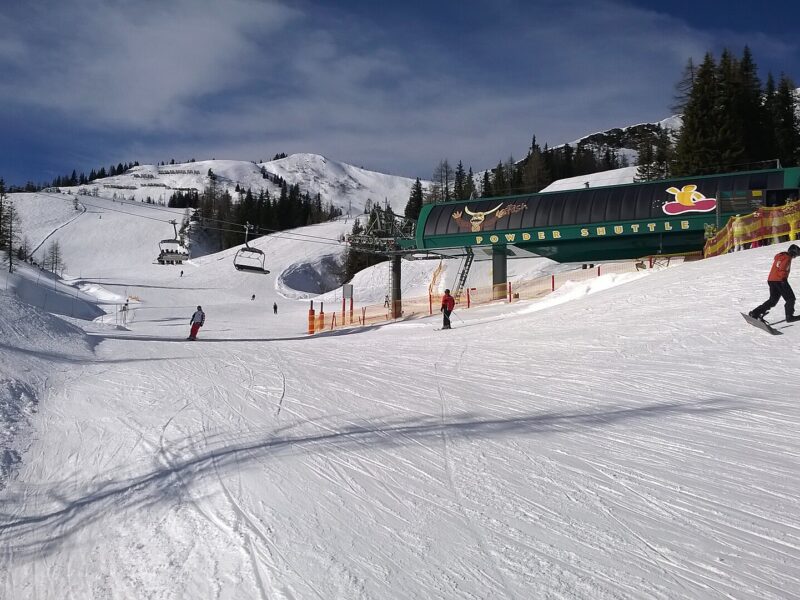
Seefeld is a ski resort in Austria, part of the Olympiaregion Seefeld area. It offers 37 km of slopes served by 11 lifts, with skiing between 1,180 m and 2,064 m (884 m vertical). That makes it the 45th largest of the 49 ski resorts in Austria listed on Intski. The season usually runs from December to April.
Top features of this resort
Snow forecast
About 4 cm of new snow at the top (2,064 m) in the next 3 days, none at the base.
New snow and temperature at the top station. Estimated by Intski from the MET Norway forecast, updated every few hours. Where it snows most this week
Email me when it snows
An alert when 15 cm or more is on the way at Seefeld, and a heads-up before it opens.
Getting there & lift pass
Nearest airport
Innsbruck (INN) — about 14 km from the resort, straight-line distance, allow more by road.
Lift pass
Adult day pass around 59.50 EUR (2025/26 season). Seefeld-Rosshütte day pass, high season rate.
Compare lift pass prices at all resortsPrice source, checked 2026-09-14
Driving to Seefeld
Rules for a car in Austria, checked 30 September 2026 against official sources.
Road charge
Vignette, plus tunnel and Brenner tolls. 1-day vignette (digital only) €9.60, 10-day vignette (digital or sticker) €12.80, 2-month vignette (digital or sticker) €32.00
Winter tyres
Required in wintry conditions, 1 Nov to 15 Apr
Studded tyres
Allowed 1 Oct to 31 May (up to 3.5 t, rear sticker, 80/100 km/h)
Seefeld resort facts
About Seefeld
Seefeld in Tirol sits on a plateau between the Wetterstein mountains and the Karwendel, about 17 km north-west of Innsbruck, on a road from Mittenwald to Innsbruck that has mattered since the Middle Ages.
Resort Highlights
A plateau village with a thousand years of history
Seefeld in Tirol sits on a plateau between the Wetterstein mountains and the Karwendel, about 17 km north-west of Innsbruck, on a road from Mittenwald to Innsbruck that has mattered since the Middle Ages. It began as a farming village, was first mentioned in 1022 and became a pilgrimage site in the 14th century, profiting both from pilgrims and from its stacking rights as a trading station between Augsburg and Venice. Shale oil has been extracted here since the same century. It was already a popular holiday resort before 1900 and has been a well-known winter sports centre since the 1930s. Today it has around 3,300 permanent residents and more than a million overnight stays a year, making it one of the most popular tourist destinations in Tyrol.
The skiing
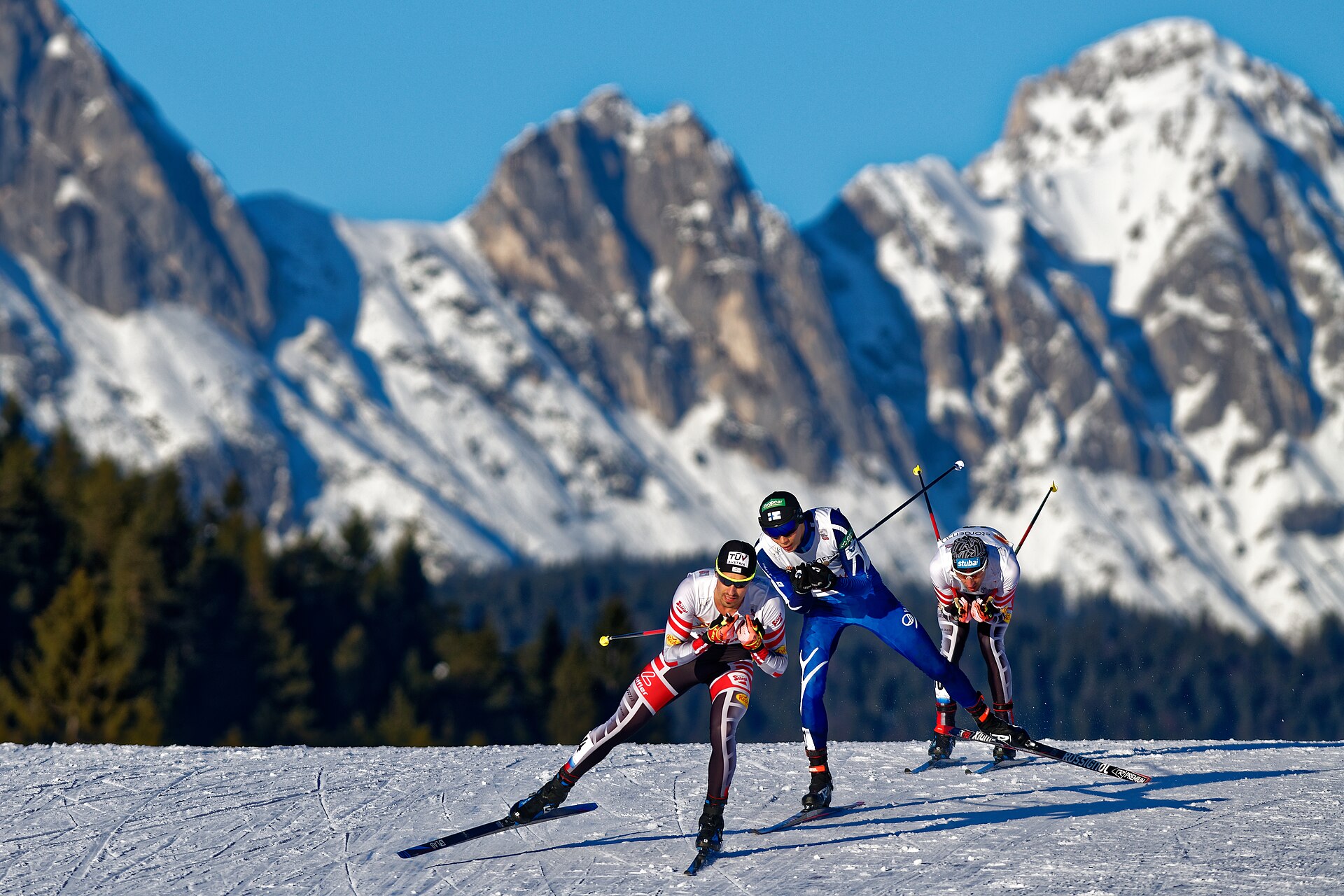
Seefeld’s downhill skiing is modest in scale: 37 km of pistes and 11 lifts, between roughly 1,180 m and 2,064 m. The vertical of just under 900 m and the top height barely above 2,000 m mean this is not a resort chosen for its piste mileage or its snow-sure altitude. What it offers instead is a compact, easily navigated area that suits beginners, families and gentle intermediates, plus a plateau setting that has made the village a byword for winter sport in a broader sense. The municipality has served as a venue for several Winter Olympic Games, and its Olympic identity is written into the name of the ski region, the Olympiaregion Seefeld.
Seefeld also has a direct claim on skiing history: it is the home village of Anton Seelos, the man credited with inventing the parallel turn. For a resort with 37 km of piste, that is an unusually large contribution to the sport.
Village and character
The village is traditional in feel and scenic in setting, and it draws visitors in summer for walking as much as in winter for skiing. Its long history as a pilgrimage and trading stop means it has a real centre with more to it than a lift base, and the plateau position gives open views towards the surrounding ranges. It suits people who want a winter holiday in which downhill skiing is one activity among several rather than the whole point.
Practical notes
Innsbruck airport is exceptionally close, roughly 14 km away as the crow flies, which makes Seefeld one of the easiest resorts in the Alps to reach. The season runs from December to April. The municipality’s official website carries local information.
Frequently asked questions about Seefeld
No. Seefeld has 37 km of pistes and 11 lifts between about 1,180 m and 2,064 m, so it is a compact area best suited to beginners, families and gentle intermediates rather than mileage hunters.
The municipality of Seefeld has been a venue for several Winter Olympic Games, and that Olympic heritage gives the Olympiaregion Seefeld its name.
Seefeld is the home village of Anton Seelos, the inventor of the parallel turn, and it has been a well-known winter sports centre since the 1930s.
Seefeld was first mentioned in 1022, began as a farming village and has been a pilgrimage site since the 14th century. It lies on a historic road between Mittenwald and Innsbruck that has been important since the Middle Ages.
The village is about 17 km north-west of Innsbruck, and Innsbruck airport is roughly 14 km away as the crow flies, making it one of the most accessible resorts in Austria.
Seefeld has 37 km of marked slopes, served by 11 ski lifts.
The skiing in Seefeld ranges from 1,180 m at the base to 2,064 m at the top — a vertical drop of 884 m.
The ski season in Seefeld typically runs from December to April. Exact opening dates vary by year and snow conditions.
An adult day pass in Seefeld costs around 59.50 EUR (2025/26 season). Seefeld-Rosshütte day pass, high season rate.
The nearest airport to Seefeld is Innsbruck (INN), about 14 km away (straight-line distance, allow more by road).
Skier reviews
Been to Seefeld? Tell other skiers what it is really like.
Sign in to leave a review
We ask for an account so every review comes from a real person. It takes about ten seconds and keeps this page free of spam.
Nearby Resorts
Other ski resorts you might enjoy