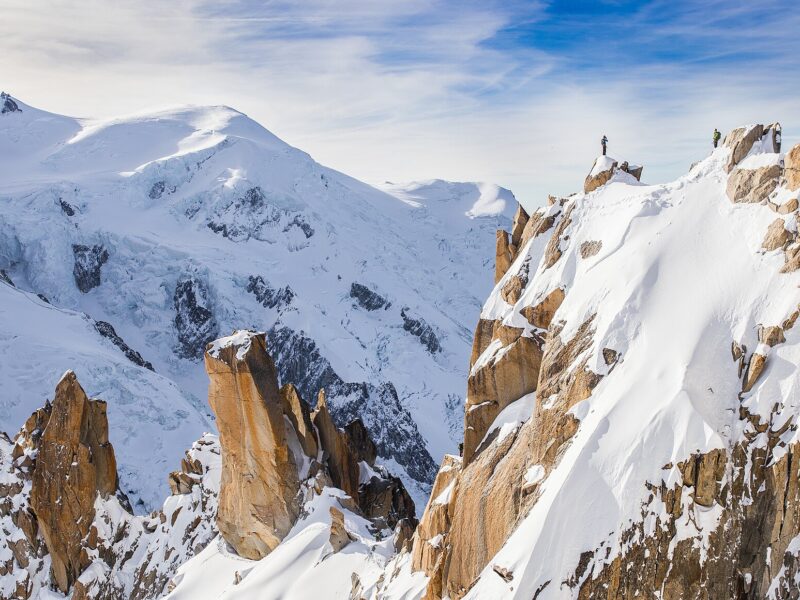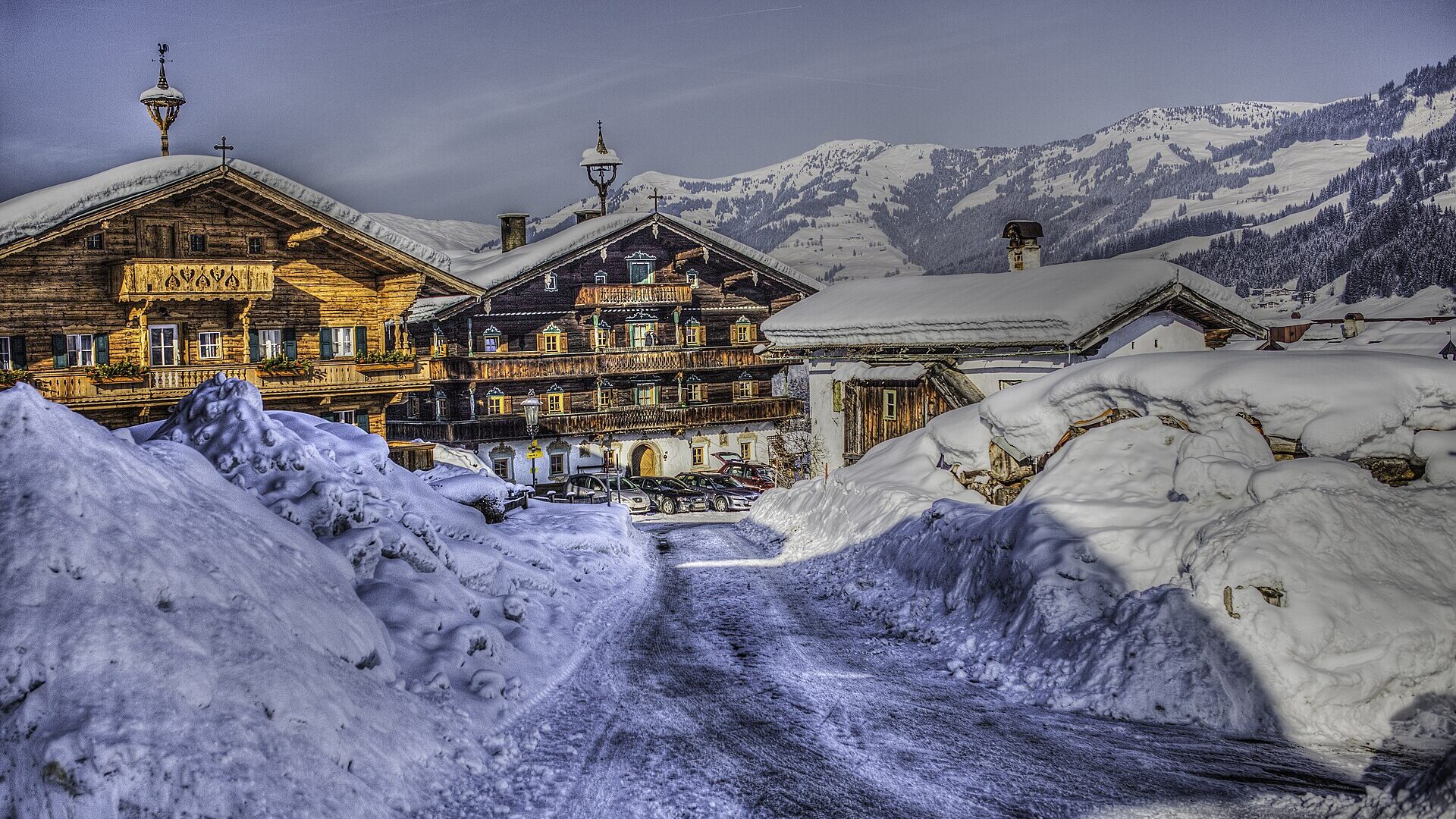
Kitzbühel and St. Anton are Austria’s two most famous ski towns, each with a legendary race and a reputation that reaches people who have never skied. The data says they are different mountains. Kitzbühel is the lower, gentler, grander one: 234 km of slopes in the KitzSki area, 54% of them easy, from a medieval town at 800 m to a top station at only 2,000 m. St. Anton is the higher, bigger, harder one: 305 km across Ski Arlberg, tops at 2,811 m, an off-piste flag and a village whose name means expert skiing. Both charge about the same, €83 against €85 a day. Choose Kitzbühel for the town, easy cruising and a mid-season week; choose St. Anton for the terrain, the snow and the après.
Key takeaways
- Kitzbühel (KitzSki): 234 km, 56 lifts, 127 km easy / 82 km intermediate / 25 km expert (54 / 35 / 11%), 800 to 2,000 m, 1,200 m vertical.
- St. Anton (Ski Arlberg): 305 km, 88 lifts, 132 km easy / 122 km intermediate / 51 km expert (43 / 40 / 17%), 1,304 to 2,811 m, 1,507 m vertical.
- Top station 2,000 m against 2,811 m: St. Anton carries a snow-sure flag in our data, Kitzbühel does not.
- Day pass €83 (KitzSki) against €85 (Ski Arlberg): €0.35 against €0.28 per km of piste.
- Airports: Salzburg 59 km from Kitzbühel; Innsbruck 83 km from St. Anton. Munich is about two hours by road from Kitzbühel and about three from St. Anton.
Kitzbühel vs St. Anton: the numbers side by side
| Kitzbühel | St. Anton | |
|---|---|---|
| Ski area | KitzSki (Kitzbühel, Kirchberg, Jochberg, Pass Thurn) | Ski Arlberg (St. Anton, St. Christoph, Stuben, Lech, Zürs, Warth) |
| Total slopes | 234 km | 305 km |
| Easy | 127 km (54%) | 132 km (43%) |
| Intermediate | 82 km (35%) | 122 km (40%) |
| Expert | 25 km (11%) | 51 km (17%) |
| Lifts | 56 | 88 |
| Km of piste per lift | 4.2 km | 3.5 km |
| Base to top | 800 to 2,000 m | 1,304 to 2,811 m |
| Vertical drop | 1,200 m | 1,507 m |
| Season (our data) | December to April | 2 December 2026 to 18 April 2027 |
| Snow parks | 1 | 2 |
| Famous race | Hahnenkamm (Streif), January | Arlberg-Kandahar, historic; World Championships 2001 |
| Steepest piste | Streif Mausefalle, 40° (85%) | Off-piste routes rather than a single marked run |
| Adult day pass 2026/27 | €83 | €85 (up 4.3%) |
| Pass cost per km covered | €0.35 | €0.28 |
| Nearest airport | Salzburg, about 59 km | Innsbruck, about 83 km |
| Intski flags | Après-ski, traditional charm, stunning views | Après-ski, off-piste, snow-sure, top facilities |
| Rank in Austria by size | 5th largest ski area | Largest ski area (with Lech Zürs) |
Source: Intski resort database and lift pass index, checked 14 September 2026. Slope figures and difficulty shares describe the whole linked area (shares from skiresort.info). Airport distances are straight-line.
The terrain: a cruising mountain against a serious one
Kitzbühel’s reputation rests on the Streif, the Hahnenkamm downhill that is the hardest race on the World Cup calendar, with the Mausefalle at 40 degrees. The rest of the mountain is nothing like it. Of KitzSki’s 234 km, 127 km is graded easy, 54% of the area and one of the highest easy shares of any big Austrian resort in our data; only 25 km, 11%, is expert. This is an all-rounder’s mountain: long blue and red cruising between Kitzbühel, Kirchberg, Jochberg and Pass Thurn, a dense lift system with 56 lifts, and one snow park. Beginners and families are its natural market, whatever the race says.
St. Anton’s 305 km are the Arlberg’s, shared with Lech, Zürs, Warth and Stuben, and the split is 132 km easy, 122 km intermediate and 51 km expert. The expert share of 17% is the higher of the two, and the figure understates the difference, because St. Anton’s terrain is defined by what is not on the piste map: it carries an off-piste flag in our data, and the routes off the Valluga, the Schindler and the Rendl are the reason strong skiers come. The easy terrain is real, 132 km of it, but most of the gentlest runs are at the Lech and Warth end of the area, a bus or a long ski away. Our guide to reading slope statistics explains why shares and totals need reading together; here the totals favour St. Anton and the shares favour Kitzbühel.
Altitude and snow
This is the clearest difference. Kitzbühel’s lifts run from 800 m to 2,000 m, and a top station of 2,000 m is below the band where altitude on its own secures snow. Our data does not flag it snow-sure, and its December to April season is best in the middle: January and February, when the Hahnenkamm is run, are its months. Early December and April are a gamble, and the town at 800 m rarely has snow to the door.
St. Anton runs from 1,304 m to 2,811 m, 800 m higher at the top, with a snow-sure flag, a 1,507 m vertical and a season from 2 December 2026 to 18 April 2027. The Arlberg is one of the snowiest corners of the Alps, and St. Anton’s “deep snow” tag in our data is deserved. For any trip outside mid-season, St. Anton is the safer booking; our guide to the best time to ski in the Alps sets out the calendar.
Lifts, size and the pass
Ski Arlberg’s 88 lifts on 305 km give 3.5 km of piste per lift; KitzSki’s 56 on 234 km give 4.2 km. Both are within the Alpine norm, and St. Anton carries the top-facilities flag. Kitzbühel’s lift system is modern too, and the 3S gondola across the Saukaser valley that links the Hahnenkamm side with Jochberg is one of the more spectacular links in Austria.
The passes cost within €2 of each other, €83 for KitzSki and €85 for Ski Arlberg, both above Austria’s median of €80. Per kilometre of piste, St. Anton is the better deal at €0.28 against €0.35, because the Arlberg is 30% bigger for 2% more.
The towns
Kitzbühel is the reason many people go. A walled medieval town with painted facades, the district capital, real estate among the most expensive in the world, luxury shops and a celebrity guest list: our data tags it luxury, tradition, medieval town and celebrity spot. It is a town first and a resort second, and the après is elegant rather than loud. Munich’s wealthy have holiday homes here, which tells you the price of a coffee.
St. Anton is a village with a single purpose. Skiing was taught here before almost anywhere else, the Arlberg ski club dates from 1901, and the après on the way down to the village is the most famous in the Alps: MooserWirt and the Krazy Kanguruh are institutions. It is sportier, younger and louder than Kitzbühel, and the crowd came to ski hard. Our data tags it legendary après, expert terrain, deep snow and the cradle of Alpine skiing.
The verdict by skier type
- Beginners: Kitzbühel. 54% easy terrain from the town’s own lifts, and a gentler mountain all round.
- Intermediates who want mileage: St. Anton, with 122 km of red runs and the whole Arlberg on one pass; Kitzbühel is enough for a week but not two.
- Experts and off-piste: St. Anton. No contest.
- Families: Kitzbühel for the terrain, if the budget stretches to the town; see our family ski resorts in Austria ranking. See our family ski holiday guide.
- Snow reliability, early or late season: St. Anton, 800 m higher at the top and snow-sure.
- The town, shopping and elegance: Kitzbühel.
- Après-ski: St. Anton for the party, Kitzbühel for a glass of wine.
- Value: St. Anton per kilometre; neither is cheap.
- Airports: Salzburg or Munich for Kitzbühel, Innsbruck or Zurich for St. Anton. See our Salzburg, Innsbruck and Munich airport guides.
For St. Anton against its other neighbour, read St. Anton vs Ischgl. Put any two side by side in the compare tool. Official sites: Kitzbühel and St. Anton am Arlberg.
Still deciding? Set a snow alert on both resort pages and book the one that gets the first big dump.
Quick answers
Is Kitzbühel or St. Anton better for beginners?
Kitzbühel. 127 km of KitzSki’s 234 km is graded easy, 54% of the area, against 43% at St. Anton, and Kitzbühel’s easy runs start from the town’s own lifts. St. Anton’s gentlest terrain is mostly at the Lech and Warth end of the Arlberg.
Is St. Anton harder than Kitzbühel?
Yes. St. Anton has 51 km of expert pistes, 17% of the Arlberg, plus an off-piste flag and famous routes off the Valluga. Kitzbühel has 25 km of expert pistes, 11%, and its one hard run is the Streif race course.
Which is bigger, Kitzbühel or St. Anton?
St. Anton. Ski Arlberg has 305 km of slopes on 88 lifts, the largest ski area in Austria in our data (Lech and Zürs share it); KitzSki has 234 km on 56 lifts, the fifth largest.
Which has better snow, Kitzbühel or St. Anton?
St. Anton. Its top station is 2,811 m against Kitzbühel’s 2,000 m, it carries a snow-sure flag in our data and the Arlberg is among the snowiest areas in the Alps. Kitzbühel is a mid-season resort, at its best in January and February.
Which is cheaper, Kitzbühel or St. Anton?
Almost the same: €83 a day at Kitzbühel and €85 at St. Anton for 2026/27. Per kilometre of piste St. Anton is better value at €0.28 against €0.35. Both towns are expensive to stay in.
How far apart are Kitzbühel and St. Anton?
About 200 km by road, roughly two and a half hours via Innsbruck and the Arlberg. Kitzbühel is 59 km from Salzburg airport as the crow flies; St. Anton is 83 km from Innsbruck.